

Date:
June 12, 2024
Category:
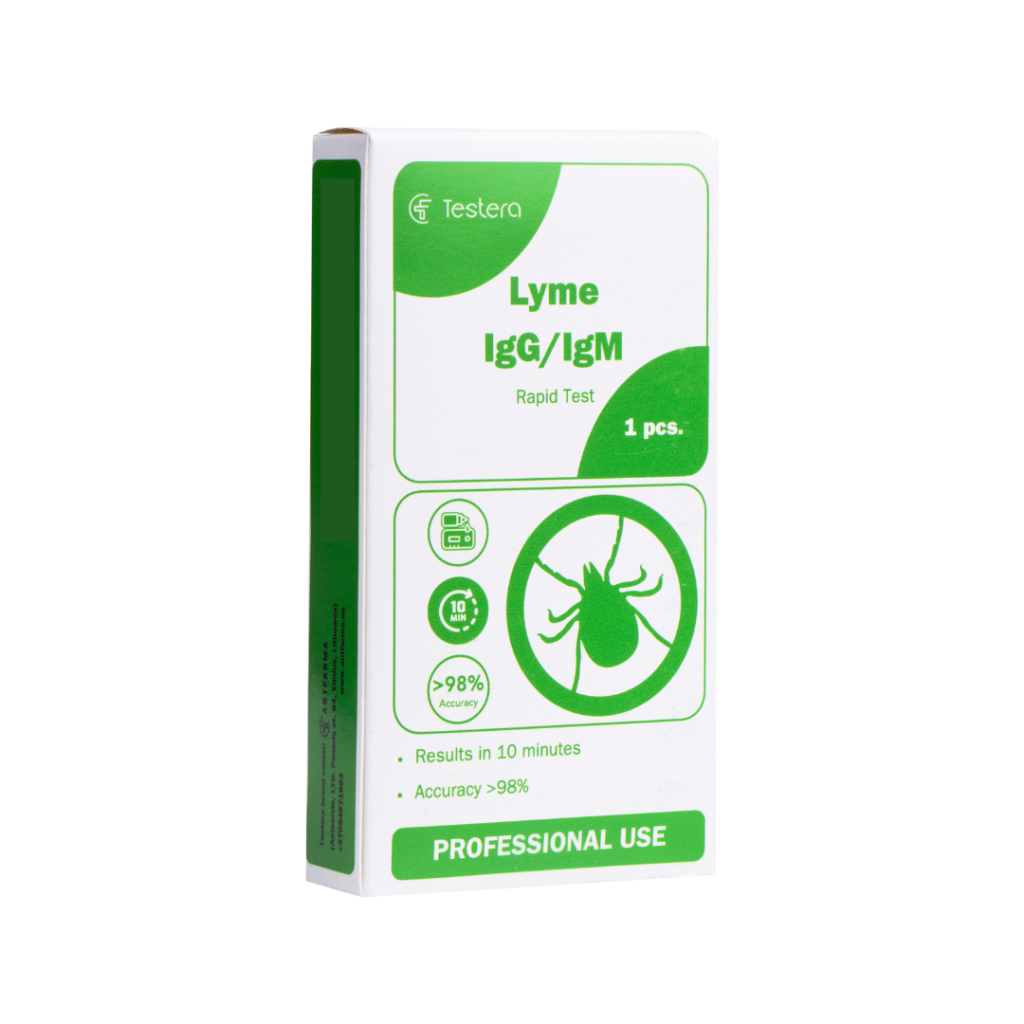
Lyme disease IgG/IgM rapid test
This is a rapid test for the detection of IgG and IgM antibodies against Borrelia in human whole blood, serum, or plasma. For professional use – performed under the supervision of a healthcare professional; supplied in a single Testera package.
About the condition
Lyme disease (Lyme borreliosis) is caused by Borrelia bacteria transmitted by ticks; in Europe, it is one of the most common tick-borne diseases. The most common early sign is a spreading pink, ring-shaped rash (erythema migrans) at the site of the tick bite after a few days or weeks, which may be accompanied by fever, fatigue, headache, muscle, and joint pain; if left untreated, the disease can affect the joints, nervous system, or heart. The risk is highest for those who spend a lot of time in forests, meadows, and gardens. Antibodies do not form immediately, so the result may be negative in the early stage – if you notice a rash or symptoms after a tick bite, consult a doctor.
Ingredients
- Test cassettes
- Droppers
- Package leaflet
- Lancets
- Buffer
- Alcohol swab
Instructions
Allow the test cartridge, buffer and/or control materials to cool to room temperature (15-30 °C) before testing.
- Keep the bag at room temperature before opening it. Remove the test cartridge from the sealed bag and use as soon as possible.
- Place the cartridge on a clean and flat surface.
Serum/plasma sample:- Use a pipette: drop 5 µL of serum/plasma into the sample well (S), then add 3 drops of buffer (approx. 120 µL) into the buffer well (B).
- Use the dropper: holding the dropper vertically, draw the sample to the upper end of the nozzle as shown in the figure below (approximately 5 µL). Transfer the sample to the sample well (S), then add 3 drops of buffer (approximately 120 µL) to the buffer well (B) and start the timer.
Whole blood sample:
- Use a pipette: pipette 10 µL of whole blood into the sample well (S), then add 3 drops of buffer (approx. 120 µL) into the buffer well (B).
- Use the dropper: holding the dropper vertically, draw the sample up to about 1 cm above the upper end of the nozzle and drop 1 full drop of sample (about 10 µL) into the sample well (S). Then add 3 drops of buffer (approximately 120 µL) to the buffer well (B) and start the timer.
- Wait for the coloured line(s) to appear. Check the results after 10 minutes. After 20 minutes, do not check the results again.
Results
IgG POSITIVE:* two coloured lines appear. One coloured line should always appear in the area of the control line (C) and the other line should appear in the area of the IgG line.
IgM CONFIRMABLE:* two coloured lines appear. One coloured line should always appear in the area of the control line (C) and the other line should appear in the area of the IgM line.
IgG and IgM POSITIVE:* three coloured lines appear. One coloured line should always appear in the area of the control line (C) and two test lines should appear in the area of the IgG line and the IgM line.
* NOTE: The intensity of the colour in areas of the test line may vary depending on the concentration of IgM IgG disease antibodies in the sample. Therefore, any shade in the line area of the test line should be considered a positive result.
NEGATIVE: A single coloured line appears in the control area (C). No line appears in the IgG area or in the IgM area.
INVALID: the control line does not appear. The most likely reasons for the non-appearance of the reference line are insufficient sample quantity or an incorrect procedure. Revise the procedure and repeat the test with a new test. If the problem persists, stop using the test kit and contact your local distributor.
Informative video
Instruction leaflet
Download instructions








Frequently asked questions
When to take a Lyme disease test after a tick bite?
Antibodies do not form immediately, so it is recommended to take the test about 4 to 6 weeks after the bite. Done too early, the test may be negative even in the presence of an infection.
What to do if bitten by a tick?
Remove the tick as soon as possible with tweezers, disinfect the wound, and monitor the bite site for a few weeks. If an expanding red spot, fever, or joint pain appears, consult a doctor.
Does a positive rapid test mean Lyme disease?
A positive result indicates that antibodies against Borrelia bacteria were detected. The diagnosis is made by a physician, evaluating the symptoms and, if necessary, laboratory tests.
Where to buy the Testera test?
Testera tests are sold in pharmacies, retail chains, and petrol stations in several European countries. Want to sell Testera products in your country? Contact us – we will offer terms of cooperation.
Rapid tests are for preliminary screening and do not replace a doctor’s consultation.